To make sure a rental property is actually suitable for a big group before you commit money, count real beds instead of trusting the “sleeps” number, match bathrooms and gathering space to your headcount, and get occupancy, rules, and total price confirmed in writing. Then ask for a room-by-room video before paying.
Key Takeaways
- A listing’s “sleeps 12” figure is a marketing number; count actual beds, their sizes, and where they sit in the house.
- Build a room-by-room roster of who needs what before you shop, then reject any listing that fails your must-haves.
- Check bathrooms, dining seats, refrigerator space, parking, and stairs, because these cause friction long before bedrooms do.
- Get legal occupancy, visitor rules, and the all-in price in writing through the booking channel.
- Ask for a current video walkthrough and floor plan, and keep payment inside the official booking process.
- Glencairn Knoll in La Grange, KY has four bedrooms, five king beds, and a two-wing layout built for 8 to 12 guests.
Why Does a Listing That Sleeps 12 Still Fail a Group of 12?
A “sleeps 12” label is a host-set capacity figure that counts every surface someone could lie down on, including sofa beds, air mattresses, and bunks. It does not tell you whether twelve people can sleep and shower at the same time. It also cannot say whether they can all eat and sit comfortably.
If you are the one asked to find a place for 12 people this year, the real question is what happens when everyone is awake. Deb and James Paul, the hosts at Glencairn Knoll, learned this during five years of hosting in Destin, Florida: a house can technically sleep a big group without accommodating one.
The gap shows up in predictable places. Beds are the wrong size for the adults assigned to them. One bathroom serves a whole floor. The dining table seats six. Two cars fit in the driveway and the rest park on the street.
This guide walks you through a repeatable screening process, from building your roster to confirming policies in writing, so you reject the wrong house before any deposit leaves your account. Each step below takes only a few minutes, and together they save you from the most expensive mistake in group travel: discovering the problem after you arrive with a dozen people and a full car.
How Do You Build a Room-by-Room Roster Before You Start Shopping?
A room-by-room roster is a simple planning sheet that lists every guest with their bed and privacy needs. It also notes mobility and sharing needs. It turns a vague headcount into specific requirements, so you can test any listing against a concrete standard instead of a gut feeling.
Start with a table of names. For each person, record four things: the bed size they need, whether they will share a room, whether stairs are a problem, and whether they need a private bathroom or a quiet space. Couples and grandparents usually go first. Light sleepers do too.
| Guest group | Bed need | Privacy need | Mobility need |
|---|---|---|---|
| Grandparents | Real king or queen | Private room, nearby bath | Main-floor bedroom preferred |
| Adult couples | Real king or queen | Door that closes | Stairs usually fine |
| Teens | Twin, sofa, or shared | Space to hang out | None |
| Young kids | Shared room or trundle | Close to parents | None |
Also write down what the group will do inside the house: cook together, watch games, swim, or play cards. Those activities determine the seating and kitchen space you need. They also set the entertainment space, which the bed count alone never reveals.
Share the draft roster with one other person in the group, such as a sibling or a cousin, and ask them to find what you missed. A second pair of eyes usually catches the guest with a bad knee or the teenager who needs a spot for remote classes.
Finally, mark each requirement as a must-have or a nice-to-have. That single step gives you a clear rejection threshold later.
What Should You Check About Beds, Bedrooms, and Sleeping Spaces?
Real beds are standard mattresses in a room with a door, as opposed to sofa beds or air mattresses. Open-loft sleeping does not count either. Counting real beds by size and location is the fastest way to find out whether a listing’s capacity claim holds up for adults.
Ask the host for a list that names every sleeping surface and its size. It should also give the floor. Then compare it to your roster. A queen sleeper sofa is fine for a teenager or a late-night straggler, but it is a poor assignment for a grandparent.
Watch for shared-space sleeping. If someone sleeps in a living room, ask whether they must leave the room when others stay up. Check also whether anyone has to walk through another bedroom to reach a bathroom, a common floor-plan flaw in older homes.
Ask about mattress quality and bedding as well. A host who can tell you the bed size and the linen setup for each room has clearly thought about guests. A host who answers with “it sleeps 12” has not.
At Glencairn Knoll, the count is simple to verify: four bedrooms with five king beds, plus a queen sleeper sofa in the speakeasy lounge for overflow. A main-floor king suite means guests who prefer fewer stairs do not have to climb for bed.

How Many Bathrooms Does a Group Actually Need?
Bathroom ratio is the number of full bathrooms relative to guests, and it predicts morning friction better than any amenity list. A common rental-checklist guideline is roughly one bathroom per three to four people, though it is a rule of thumb, not a standard.
Count full baths separately from half baths, and note which floor each one is on. Ten guests with three well-placed bathrooms can work. Two bathrooms for ten usually means queues and rushed showers, especially when everyone has a morning plan.
Location matters as much as number. If every bedroom is upstairs and the only full bath is downstairs, grandparents and toddlers will feel it at 2 a.m.
The two-wing layout at Glencairn Knoll spreads four bathrooms across separate sleeping areas. Each family or generation can use its own wing instead of lining up in a shared hallway. Ask any host you are considering for the same detail: which bathroom serves which bedrooms? Also ask about water heater capacity if the house has many guests, since a single small tank can turn the fourth shower of the morning cold.
Will the Common Areas, Kitchen, and Dining Space Handle Everyone?
Common-area capacity is the combined seating and dining space available when the whole group is home at once. The kitchen and refrigerator space count too. A house can pass the bed test and still fail at dinner if the table seats six and the fridge holds a weekend for four.
Ask how many people fit at the dining table and at the kitchen counter. Check whether the kitchen suits multiple cooks, with enough oven space and pans. Serving dishes matter too. Refrigerator size matters on stays longer than a weekend.
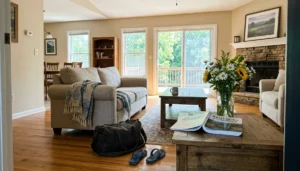
Look for escape hatches too. Groups need one noisy space and one quiet one. A game room for the teenagers and a separate sitting area for the adults keeps everyone in the house instead of drifting off.
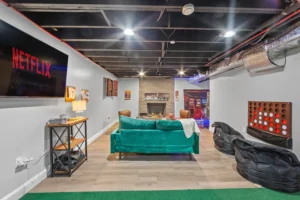
Guests at Glencairn Knoll have sent photos of seven grandchildren, ages 16 to 25, lined up at the kitchen island over breakfast. The chef’s kitchen and two game rooms give separate generations somewhere to land. So do the speakeasy lounge and karaoke lounge. Built for Joy explains the thinking behind the design.
How Do You Separate Legal Occupancy From Comfortable Capacity?
Legal occupancy is the maximum number of overnight guests permitted by local rules and the host’s own policy, while comfortable capacity is the number a house can hold without anyone feeling squeezed. The two figures are different, and only comfort is under your control.
Do not assume a generic number applies. Occupancy limits vary by county and city, and by the host’s insurance. Ask the host to state the maximum in writing and confirm with the relevant local office if the number looks unusual. For a Kentucky property, that means checking with the county where the house sits, such as Oldham County for La Grange.
Next, ask how daytime visitors are handled. Many hosts require registration of every person on the property, and events are often prohibited. If your reunion includes people who will drop by for dinner, say so before booking.
Glencairn Knoll sets a clear boundary: only registered guests may use the property, events are not permitted, and quiet hours apply. The hosts would rather decline a booking than accept one built on mismatched expectations, and a host who explains limits that plainly is a good sign.
What Should You Verify About Parking, Stairs, and Accessibility?
Access logistics cover parking capacity and stair counts. They also include entry steps and the location of main-floor rooms. These details rarely appear in a listing headline, yet they decide whether a mixed-age group arrives comfortably or spends day one solving problems.
Ask how many vehicles fit on the property and whether street parking is allowed. A group of 12 often arrives in four or five cars. A rural property with a long driveway handles this better than a city home with two spots.
Ask about stairs at the entrance and between floors. Ask about the way to the pool or yard too. Request the location of the nearest bedroom and bathroom for anyone using a walker or cane.
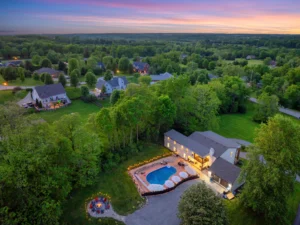
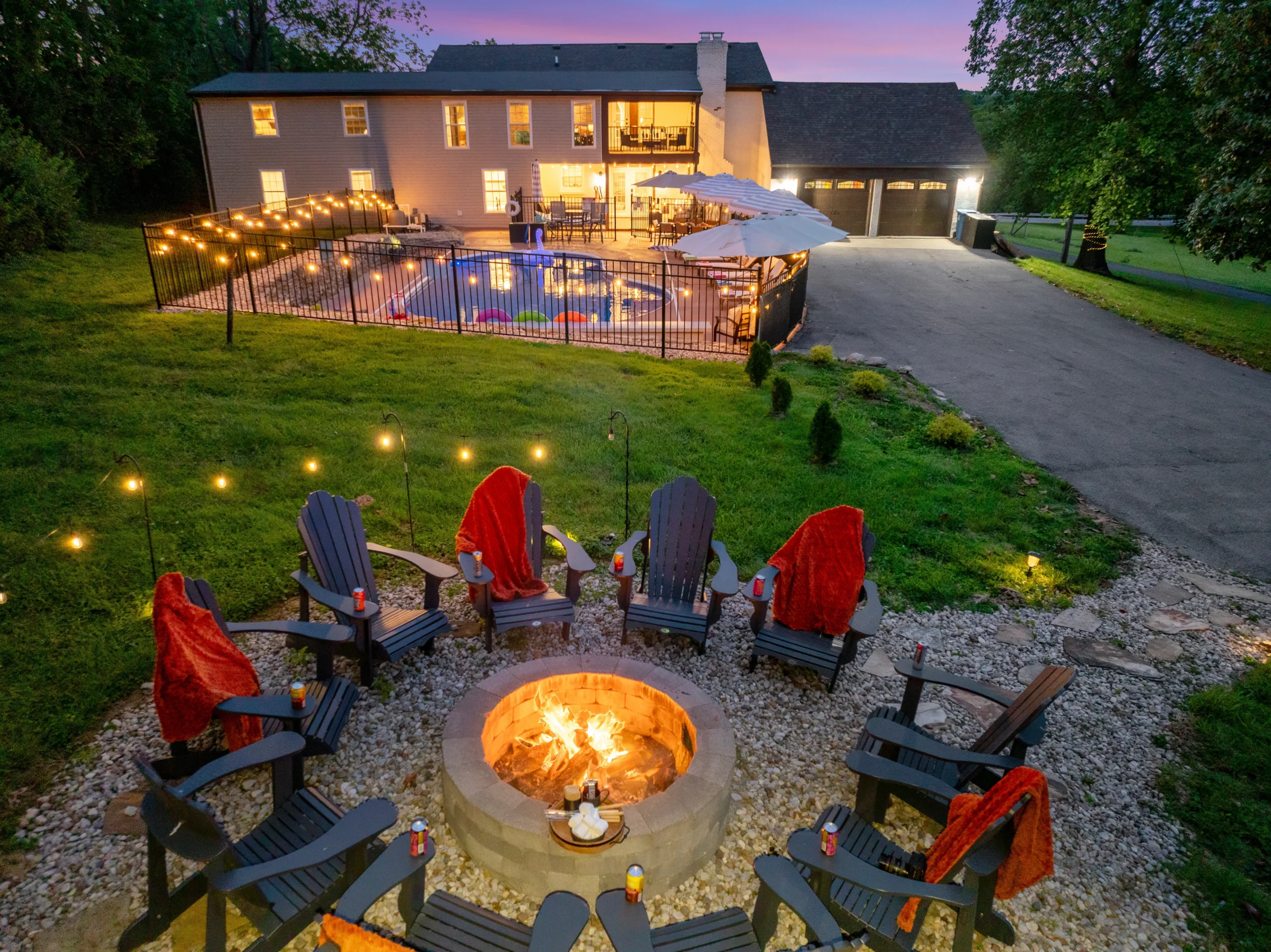
Glencairn Knoll sits on 3.75 private acres in a residential area of La Grange, KY, so parking is not a squeeze. It is also a country retreat: guests need a car to reach Louisville, about 25 minutes away, or the bourbon distilleries nearby. If immediate access to downtown nightlife matters most, a different property serves you better.
How Do You Calculate the All-In Price and Read the Payment Terms?
All-in price is the total cost of a stay after cleaning fees, service charges, taxes, extra-guest fees, and deposits are added. Comparing nightly rates alone misleads, because two listings with similar rates can differ by hundreds of dollars at checkout.
Build a simple worksheet for every candidate with these lines: base rental, cleaning charge, guest fees, refundable security deposit, optional extras, travel insurance, and taxes. Then divide the total by your headcount to compare cost per person. Pricing varies by season and dates, so always price your exact dates.
Read the cancellation policy before you pay. Note the deadline for a full refund, how the deposit is returned, and whether a damage waiver applies. Ask what happens if a few guests drop out.
Keep payment inside the official booking channel. Avoid wiring money or paying by methods the host will not put in writing. Booking direct on a host’s own site is a valid choice when the terms are clear; the questions page is a useful place to read a host’s stated policies.
What Questions Should You Ask the Host Before Paying?
Pre-booking host questions are specific written requests that turn a listing’s claims into confirmed facts. Strong questions focus on beds and bathrooms. They also cover rules and the exact condition of shared spaces, and the answers should come in writing through the booking platform or email.
- How many real beds are there, and what size is each?
- Which bedrooms share a bathroom, and which floor is each on?
- What is the written maximum overnight occupancy?
- How are daytime visitors and events handled?
- How many cars fit on the property?
- Are towels, bedding, toiletries, and laundry supplies included?
- What are the quiet hours, pet rules, and smoking policy?
- What are the cancellation deadlines and deposit terms?
- Can you send a current video walkthrough of every room?
Searching the property by name and street address, and asking for a live video tour, also helps you confirm the listing is legitimate. A host who answers all nine without hesitation usually runs the property well.
When Should You Reject a Listing Outright?
A rejection threshold is a pre-set must-have that, if unmet, ends the evaluation. Setting it before you fall in love with photos protects you from talking yourself into a house that does not fit.
Reject a listing when any of these are true:
- Adults who need real beds are assigned to sofas or air mattresses.
- Bathrooms fall short of your group’s tolerance, or the only full bath is a floor away from the older guests.
- The dining table cannot seat at least most of the group.
- The host will not put occupancy, fees, or rules in writing.
- Requested video or floor plans are refused or keep getting delayed.
- Payment must leave the official channel.
Be equally honest about preferences. If your group wants a resort with a spa and a daily schedule, a private house may not fit, and a resort could work better for a reunion with mixed interests. A house suits groups who want shared meals and private rooms. It also suits those who want unhurried time together.
How Does Glencairn Knoll Meet This Checklist for 8 to 12 Guests?
Glencairn Knoll is a 5,500 square foot house in La Grange, KY, in Oldham County, designed for multi-generational groups of 8 to 12. Run the same checklist against it: four bedrooms and five king beds. Add four bathrooms and a queen sleeper sofa for overflow.
The two wings give each family or generation its own quiet end of the house, and the main-floor king suite works for guests who prefer fewer stairs. One group of three families described having plenty of room to spread out and come together.
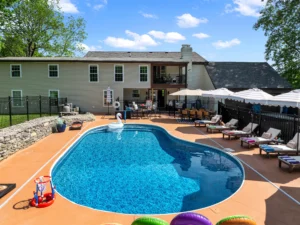
Shared space is generous. It includes a chef’s kitchen, two game rooms with a pool table and arcade games, and a karaoke lounge. There is also a speakeasy lounge with neon signage, a fire pit, a covered hot tub, and a heated 38-foot saltwater pool that can be used year-round. Rain does not cancel the trip, since two indoor game areas and the lounges keep the day going.
For local context, the property is about 20 to 25 minutes from downtown Louisville and nearby bourbon distilleries. Hermitage Farm in Goshen is a good non-distillery stop for mixed-age groups, and the Bourbon Trail in a day guide helps you plan driving time. For more on how generations share a trip, see the multigenerational vacation effect.
Frequently Asked Questions
What should you check before booking a large group vacation rental?
Check real bed counts and sizes, bathroom ratio and location, dining and seating capacity, parking, stairs, and written occupancy and visitor rules. Then confirm the all-in price and cancellation terms. Ask for a room-by-room video before paying.
What does sleeps 12 mean in a vacation rental?
“Sleeps 12” is the host’s stated maximum overnight capacity, and it often counts sofa beds, bunks, and air mattresses. It does not guarantee twelve adults will have real beds, so compare the number to the actual bed list.
What questions should I ask a vacation rental host?
Ask about bed sizes and locations, which bathrooms serve which rooms, written maximum occupancy, visitor and event rules, parking capacity, supplies, quiet hours, and cancellation terms. Request a current video walkthrough and keep the answers in writing.
How do vacation rental cancellation policies and deposits work?
Policies vary by host and platform. Most set a deadline for a full or partial refund, and many require a security deposit that is returned after checkout if there is no damage. Read the deadlines and refund terms before you pay, and confirm them in writing.
What are the best large group vacation rentals near La Grange, Kentucky?
Glencairn Knoll is a large group house in La Grange, KY with four bedrooms, five king beds, a heated saltwater pool, a covered hot tub, and two game rooms for up to 12 guests. When comparing any option, run it through the checklist above for beds and bathrooms. Add the rules too.
Would a resort work better than a vacation rental for a reunion with mixed ages?
It depends on the group. A resort offers scheduled activities and on-site dining. A private house offers shared meals and flexible schedules, with separate wings for privacy. Mixed-age families who want to spend most of their time together often prefer a house with games and a pool. A big kitchen helps too.
Is Glencairn Knoll a good fit for every kind of group?
Glencairn Knoll suits families and friends who want privacy and comfort. Recreation matters to them too. It is not designed for late-night party groups or events. Guests who want to walk to downtown nightlife should also look elsewhere, since it is a private country property that requires a car.
What Is the Best Way to Commit Money With Confidence in 2026?
To make sure a rental property is suitable for a big group before you commit money, build a roster. Then count real beds and match bathrooms and common space to your headcount. Finally, get occupancy, rules, and total price in writing. A video walkthrough closes the last gap.
Whatever is bringing your group to the La Grange or Louisville area in 2026, whether a reunion, a bourbon trail weekend, or a milestone celebration, a little planning goes a long way. And when it is time to book the house that fits everyone, Glencairn Knoll’s four bedrooms and five king beds are ready for the whole crew, along with its resort-style amenities.
Deb and James Paul would love to host your group. Check availability for Glencairn Knoll and book directly with the hosts.
Content powered by inkSTR.co