Is it cheaper to rent one big house or get multiple smaller places for a family gathering? For most groups of 8 to 12, one house costs less overall. Cleaning fees, taxes, extra kitchens, and parking add up fast across several rentals. Multiple places win mainly when families need real distance from each other.
Key Takeaways
- One large house is usually cheaper for a group that fits under one roof, because cleaning and service fees are charged once.
- Compare the final checkout total for each option, never the nightly rate alone.
- Multiple smaller rentals make sense when families keep different sleep schedules or the group outgrows a single house.
- One shared kitchen cuts restaurant spending and duplicate grocery runs.
- Always verify occupancy limits, real bed types, and bathroom counts before choosing the lowest price.
- Glencairn Knoll in La Grange, KY sleeps up to 12 across four bedrooms and five king beds, with a two-wing layout for privacy.
If you’re the one being asked to find a place for 12 people this summer, the math feels harder than it should. Nightly rates look simple. Fees, groceries, and bedroom politics are where the real cost hides.
At Glencairn Knoll in La Grange, KY, Deb and James Paul have hosted large groups since their years running a vacation rental in Destin, Florida. Guests have arrived as one big family and as several families sharing a trip. Both setups can work. The right choice depends on your numbers and your people.
This guide gives you a fee checklist, a like-for-like example, a cost-splitting method, and a pre-booking verification list for 2026. For wider trip planning, the Kentucky family vacation guide covers the rest.
1. Is It Cheaper to Rent One Big House or Get Multiple Smaller Places for a Family Gathering?
A single large rental is usually cheaper per person when your whole group fits within its sleeping capacity. The reason is simple: cleaning fees, service fees, and deposits are charged once instead of once per unit.
Nightly rates can mislead you. Three small rentals may each look cheap, yet each one carries its own cleaning charge and its own taxes, plus its own grocery run. One house might show a higher nightly number and still finish lower at checkout.
The exception is scale. Once a group passes what one property can legally and comfortably hold, you need a second unit anyway. A hybrid also works: one main house for gathering, plus a hotel room or small rental for overflow.
Before you compare anything, write down the total guests, the number of nights, and the dates. Every quote you collect must use the same facts. Otherwise you are comparing different trips.
2. What Fees Change the Total Cost of a Group Rental?
Group rental fees are the charges added on top of the nightly rate, and they decide which option is cheaper. Cleaning, platform service, lodging tax, pet, parking, and deposit charges can each shift the final total by a meaningful amount.
Build your comparison around this checklist, filled in once per property:
- Nightly rate for your exact dates, since weekends and holidays price higher than weekdays.
- Cleaning fee, paid once per unit regardless of stay length.
- Lodging tax, which typically falls between 5 and 17 percent in most US jurisdictions; confirm the local rate at checkout.
- Pet fees, charged per pet and sometimes per property.
- Parking or amenity charges, more common with condos.
- Deposit and cancellation terms, which matter more when you book several places.
Fees multiply with every extra unit. That is the main reason several small rentals often cost more than their nightly rates suggest.
3. How Does a Worked Cost Example Compare One House to Three Rentals?
A worked example is the fastest way to see the gap. The numbers below are round, made-up figures for illustration only. They are not market quotes, so replace them with real prices for your dates. The pattern is what matters: the single house carries one cleaning fee, while the three-rental option repeats it.
Suppose 12 guests stay 3 nights. Option A is one four-bedroom house at $800 per night with a $300 cleaning fee. Option B is three two-bedroom rentals at $350 per night each, with a $150 cleaning fee per unit.
- Option A: $800 x 3 nights = $2,400, plus $300 cleaning = $2,700.
- Option B: $350 x 3 nights x 3 units = $3,150, plus $450 cleaning = $3,600.
- Per guest: about $225 for Option A and $300 for Option B.
- Apply the same tax and service percentage to both. The dollar gap widens because Option B starts higher.
Now add groceries. Option B means three kitchens and three stocked pantries. Option A means one. The house stays ahead unless your real quotes differ sharply from this pattern. To test it, request written all-in quotes from at least two properties of each type for your dates and drop your own figures into the same formula.
4. How Do You Split the Bill Fairly Among Families?
Cost splitting is the method a group uses to divide lodging and shared expenses among households of different sizes. A clear rule agreed before booking prevents most reunion arguments later.
Here are the common methods:
- Per head: divide the total by guest count, with children under a set age paying half. This is the simplest and my pick for most groups.
- Per family: a flat share for each household. It works only when families are close in size.
- Per bedroom: each household pays for the rooms it uses. It suits groups where one family takes a premium suite.
Whatever you choose, split fixed costs such as cleaning and groceries by head count. Pay the deposit from one organizer’s card and collect shares within a week.
One fairness point: private-suite pricing. If grandparents take the main-floor king suite, do not charge them extra for the easier stairs. Ask each household which room they want first, then price by headcount.
5. Do Shared Kitchens and Meals Change the Math?
Shared meal cooking is the practice of preparing group breakfasts and dinners in one rental kitchen instead of eating out. It is often the largest hidden saving in a multi-night gathering.
Food is a real slice of any Kentucky trip. Kentucky Tourism reports that Oldham County visitors spent $15.35 million on food and beverage in 2026. Restaurant tabs for 12 people add up quickly, especially with kids.
One kitchen also removes duplication. You buy one carton of eggs, one bag of coffee, and one set of condiments. With three rentals, each household shops separately and wastes leftovers.
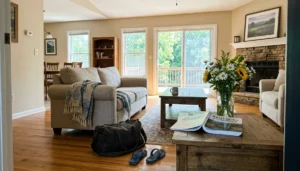
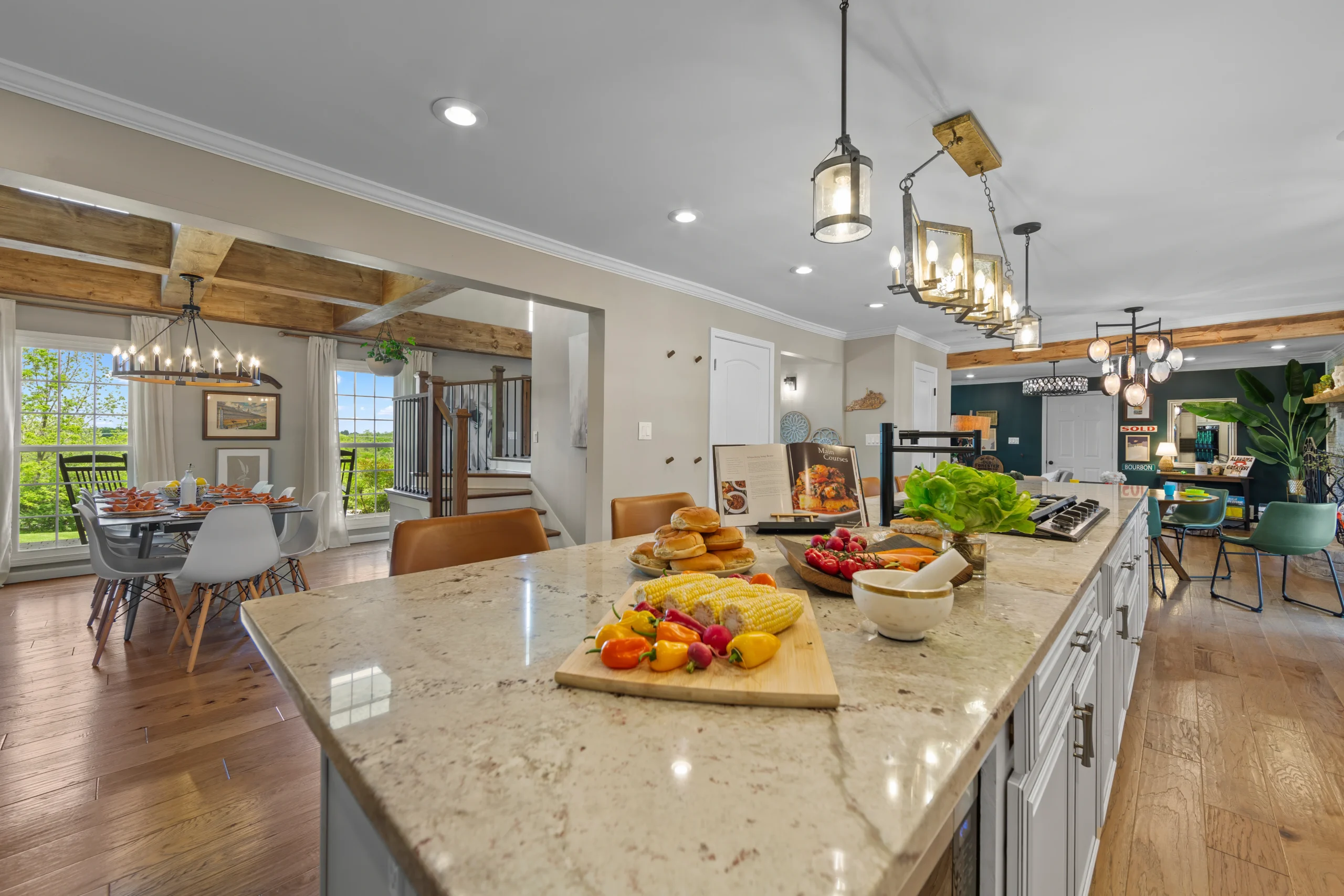
The kitchen at Glencairn Knoll has a large granite island, open dining space, and French doors overlooking the grounds. That layout lets one cook prep while others sit nearby. It is built for exactly this kind of group breakfast.
6. When Do Multiple Smaller Places Make More Sense?
Multiple smaller rentals are separate nearby properties booked together for one group. They make more sense when privacy, sleep schedules, or headcount matter more than the lowest total.
Choose several places when:
- Your group is larger than one house can legally sleep.
- Families keep very different schedules, such as toddlers and early-rising grandparents.
- Budgets vary, and one household wants a simpler, cheaper unit.
- Neighboring properties are truly walkable, which you should confirm on a map.
Be honest about the downside. Gathering takes more effort when everyone sleeps in different buildings. Someone always drives, and the late-night card game thins out.
A two-wing house offers a middle path. At the multigenerational vacation effect level, the point is that separate zones under one roof can give each family privacy without splitting the trip.

7. Does Booking Direct Change the Comparison?
Booking direct means reserving through a host’s own website instead of a third-party platform. It can remove platform service fees, though you should still compare final totals.
Whether you book through Airbnb, VRBO, or a host’s site, look at the checkout screen. Compare the all-in price with cleaning, tax, and any deposit included. Pricing varies by season and dates, so a quote from another month tells you little.
Direct booking also gives you a person to ask. If you need to confirm bed types or quiet hours, you can message the hosts. Glencairn Knoll’s questions page, answers common booking questions before you inquire.
One caution applies to any option: read the cancellation terms. Three bookings mean three cancellation clocks. If one family drops out, the other two reservations may be hard to adjust.
You can check availability and see your full total on the property’s own booking page.
8. What Should You Verify Before Choosing the Cheapest Option?
A pre-booking verification is a short check that confirms a cheap listing actually fits your group. It protects you from a low price that falls apart on arrival.
- Occupancy limit. Confirm the stated maximum, not just the number of beds.
- Real bed types. Five king beds and a sleeper sofa are very different from a pile of air mattresses.
- Bathroom count. Twelve guests sharing two bathrooms means a slow morning.
- Stairs and accessibility. Ask where the nearest ground-floor bedroom is.
- Walkability. For multiple units, measure the actual path between them.
- House rules. Ask about quiet hours, registered-guest limits, and event policies.
That last one matters if your gathering involves a wedding weekend. Lodging for out-of-town guests is fine at most homes. Receptions and events usually are not, so ask in writing.
Also confirm whether the weather plan works. A group that depends on an outdoor pool needs indoor backups for a rainy afternoon.
9. Why Does Glencairn Knoll Work as the One-House Option Near Louisville?
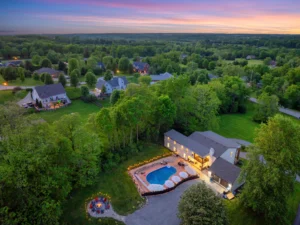
Glencairn Knoll is a 5,500 square foot house on 3.75 private acres in La Grange, KY, built for groups of up to 12 guests. It has four bedrooms, four bathrooms, and five king beds, plus a queen sleeper sofa in the speakeasy lounge.
The two-wing layout is the cost-saving feature that most people miss. Each family gets its own quieter section, so you avoid renting a second place for privacy. A main-floor king suite also means grandparents skip the stairs.
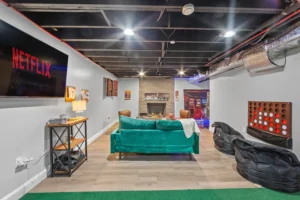
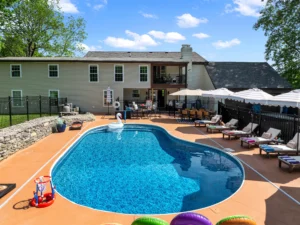
Common spaces cover the rest. The 38-foot saltwater pool can be heated on request, and the covered hot tub extends the season. Two game rooms, a karaoke lounge, a fire pit, and a gym give every generation a choice. See how the heated pool works for a Louisville stay.
Distances from the property are short. Downtown La Grange is 2.1 miles away, about 5 minutes. Downtown Louisville is 20.1 miles, about 25 minutes.
Here is the honest caveat. This is a private country retreat, so you need a car. It also suits families and friends, not all-night parties. Bourbon-focused groups can read the Bourbon Trail in a day itinerary for distillery planning.
So Which Should You Book for Your Family Gathering?
So, is it cheaper to rent one big house or get multiple smaller places for a family gathering? For a group of 8 to 12 in 2026, one house is usually cheaper once cleaning, taxes, and food are counted. Choose multiple places only when privacy or headcount demands it.
Run your own numbers with the same dates and guest count for every option. Use the checklist from section 2 and the verification list from section 8. The final total, not the nightly rate, tells the truth.
Whatever brings your group to the La Grange or Louisville area, a little planning goes a long way. When it is time to book the house that fits everyone, Glencairn Knoll’s four bedrooms and five king beds are ready for the whole crew.
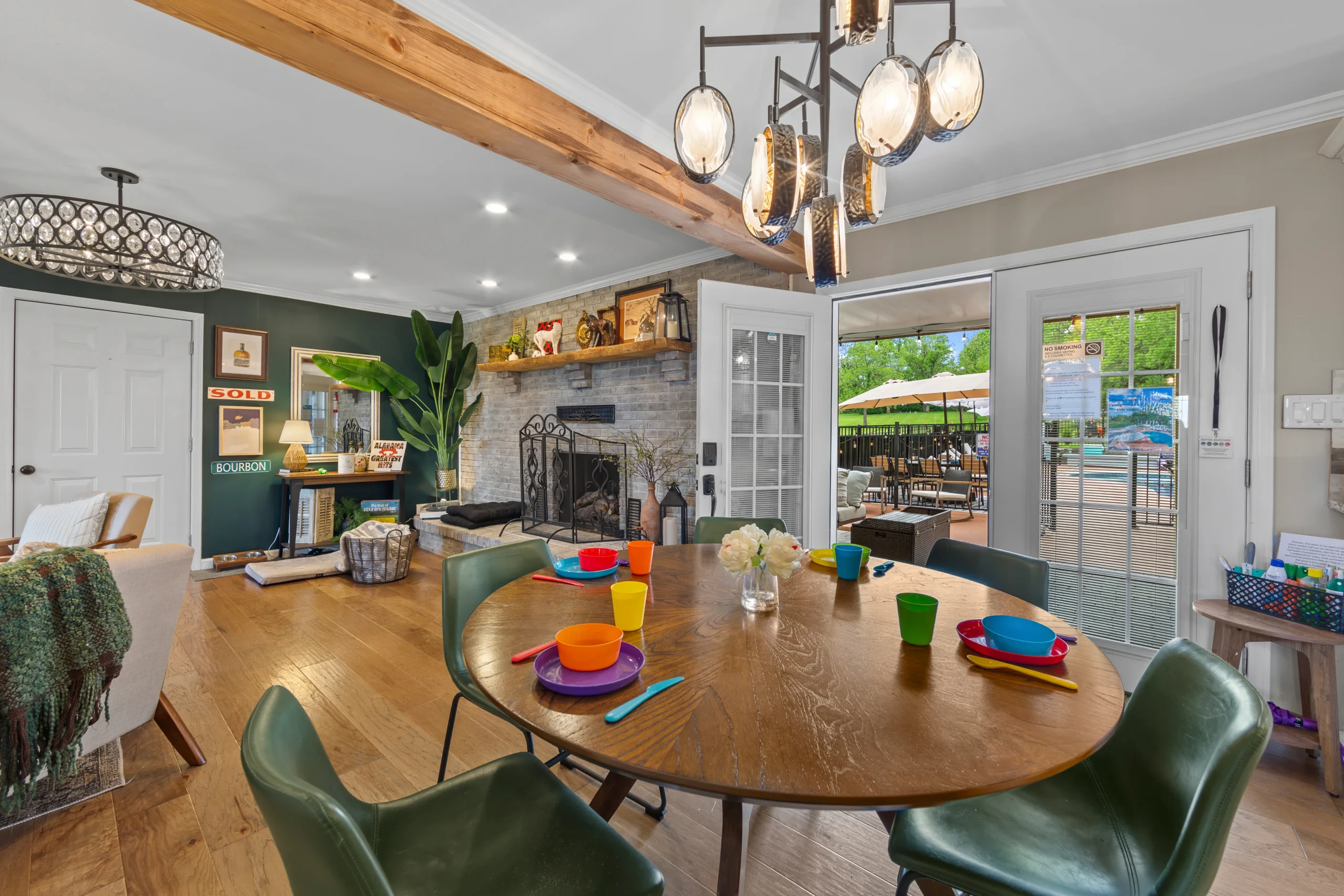
Ready to bring the whole family together under one roof? Book Glencairn Knoll directly with Deb and James Paul and see your full total for your dates.
Frequently Asked Questions
Is it cheaper to rent one big house or multiple smaller places for a family reunion?
For groups of 8 to 12, one big house is usually cheaper. Cleaning fees, service fees, and deposits are charged once. You also cook in one kitchen instead of several. Multiple places can win when your group exceeds one house’s capacity.
What costs should families compare when booking group lodging?
Compare the nightly rate, cleaning fee, service fee, lodging tax, pet fees, parking, and deposits. Add groceries and any restaurant spending. Divide the total by guest count to get a fair per-person number.
What fees affect the total cost of vacation rentals?
Cleaning fees, platform service fees, and lodging taxes are the most common. Pet charges and parking fees apply at some properties. Each extra unit repeats these fees, so confirm the final total at checkout.
Where can I rent a house for a wedding weekend or small destination wedding?
Look for a house that welcomes registered overnight guests and states its event policy in writing. Glencairn Knoll in La Grange, KY works as lodging for wedding guests near Louisville. Events and receptions are not permitted there, so you need a separate venue for the ceremony.
What are the best large group vacation rentals in Louisville for families?
Glencairn Knoll is a La Grange, KY house that sleeps up to 12 across four bedrooms and five king beds. It has a two-wing layout, a heated saltwater pool option, a covered hot tub, and two game rooms. It sits about 25 minutes from downtown Louisville. Compare any option on bed types, bathrooms, and house rules.
How do I book a Louisville vacation rental for a family reunion?
Start with your dates and guest count. Request the all-in total from each property and verify occupancy and bed types. Then reserve with a deposit from one organizer. For Glencairn Knoll, use the booking page and confirm availability for your dates.
It can, because direct bookings may skip platform service fees. Savings vary by property, season, and dates. Compare the final checkout totals side by side before deciding.
How many people does Glencairn Knoll sleep?
Glencairn Knoll sleeps up to 12 guests. The house has four bedrooms with five king beds and a queen sleeper sofa in the speakeasy lounge. A main-floor king suite suits guests who prefer fewer stairs.
Content powered by inkSTR.co